
Module 1 · Where Wastewater Odors Come From
Sulfate-Reducing Bacteria
Sulfate is a dissolved form of sulfur commonly present in wastewater. Under low-oxygen conditions, sulfate-reducing bacteria can use sulfate while breaking down organic matter. Their activity produces dissolved sulfide.
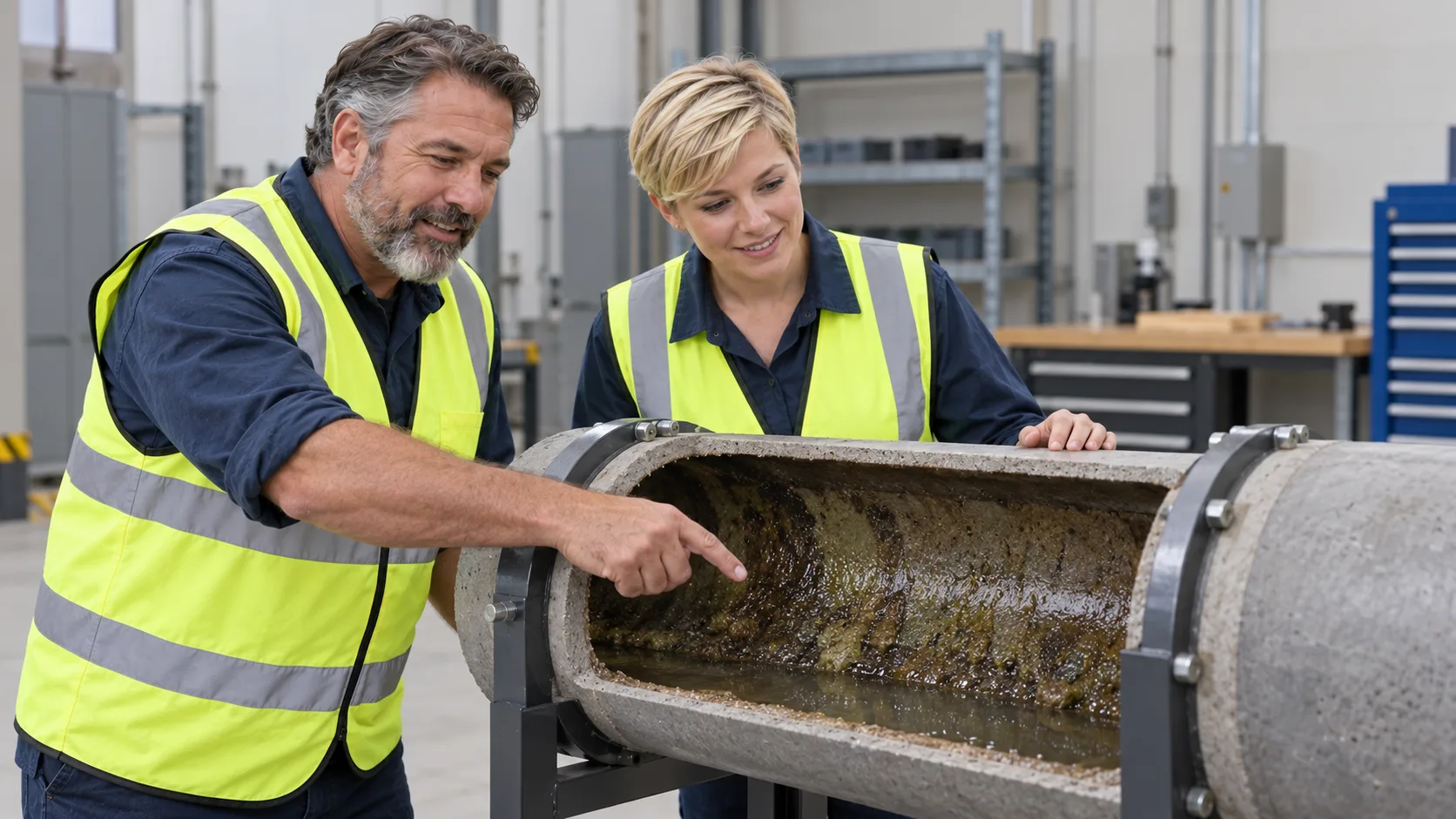
These bacteria often grow in slime layers on submerged pipe walls and in deposits. A slime layer, also called a , is a community of microorganisms attached to a wet surface. Deposits can provide both food and protected low-oxygen conditions.
Removing deposits, improving flow, or changing the available electron acceptor may reduce sulfide formation. An electron acceptor is a substance microbes use to complete the reactions that release energy from food. Results depend on the whole system, so operators should use monitoring data and work with their engineer and treatment supplier.
During inspections, note recurring deposits, stagnant areas, grease, and locations that remain submerged. Write down cleaning dates, material removed, flow patterns, and sulfide results. Alert maintenance and process staff if deposits return quickly or a change appears to move the problem downstream.
Exam Need to Know
- Sulfate-reducing bacteria turn sulfate into sulfide when oxygen is low.
- They thrive in slime layers (biofilm) and deposits on pipe walls.
- Low oxygen, sulfate, organic food, and time all favor sulfide.
Exam area: Treatment Process